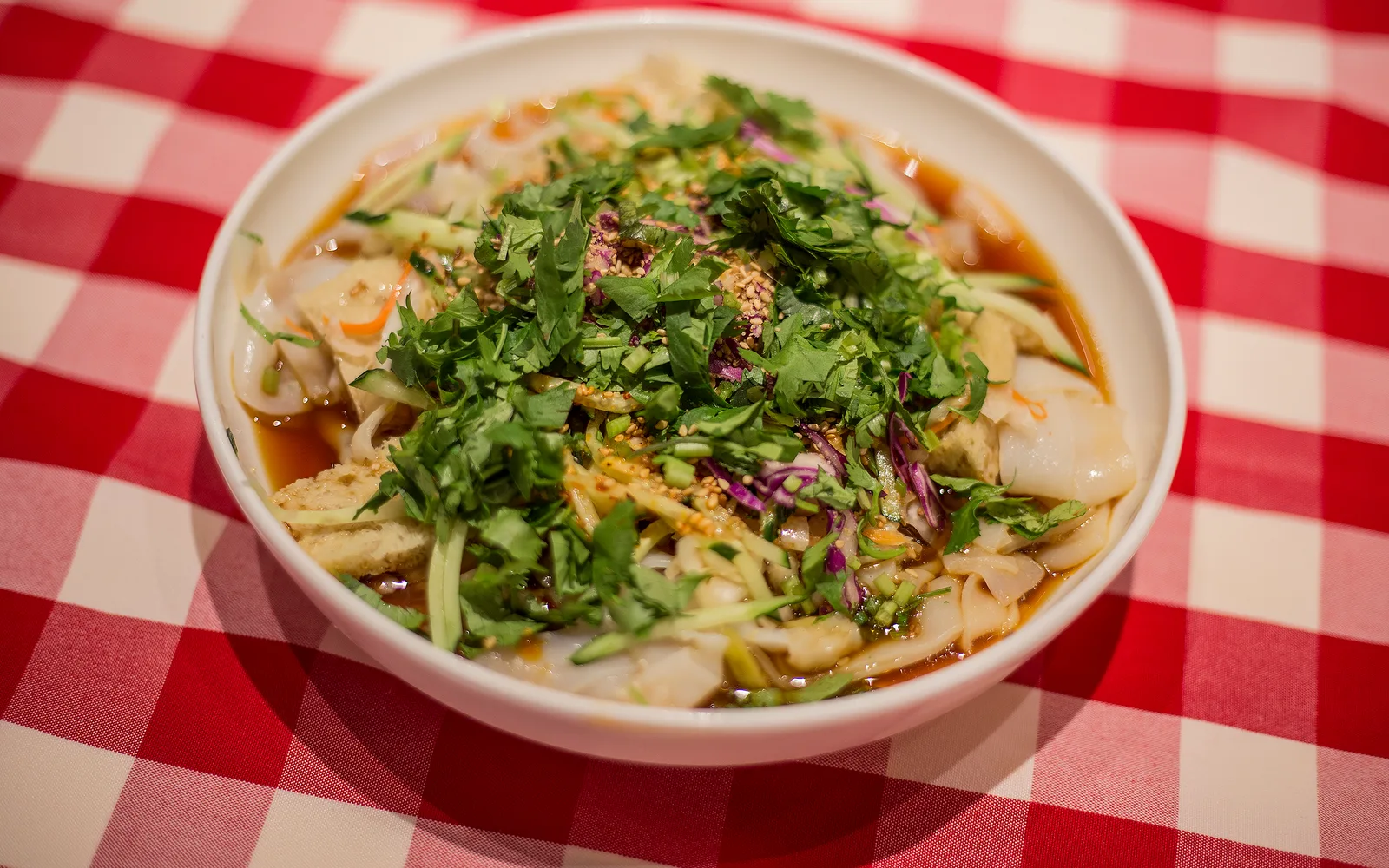
China is workable for vegetarians, and harder for vegans and for anyone who assumes a vegetable dish contains no meat. Tofu, greens, noodles and rice are on every menu, and Buddhist vegetarian restaurants serve no meat or fish at all. The difficulty is what you cannot see: lard, meat stock, oyster sauce and minced pork go into dishes that look vegetarian. What works is telling the kitchen in Chinese exactly what you do not eat, and choosing the restaurant before you are hungry. On a private tour, that is the guide’s job.
Is China vegetarian-friendly?
Yes in the big cities, with care elsewhere. The Michelin Guide lists starred vegetarian restaurants in Beijing, Shanghai and Chengdu, and Chinese map apps show ordinary vegetarian restaurants under 素食 in most cities. In small towns and scenic areas there may be none, and you order vegetable dishes in ordinary restaurants. Strict vegans and Jain travellers need the most planning, because egg, onion and garlic are harder to keep out of a dish than meat.
What “vegetarian” means in Chinese
| Standard | Say or show | What it leaves out |
|---|---|---|
| Vegetarian, eggs and dairy fine | 蛋奶素 (dàn nǎi sù) | Meat, poultry, fish and seafood |
| Vegetarian, dairy but no eggs | 奶素,不吃蛋 | The above and eggs. This is the standard of many Indian vegetarians |
| Vegan | 纯素 (chún sù) | The above and dairy and honey |
| Buddhist vegetarian | 净素 (jìng sù) | Meat, fish, eggs, and the pungent vegetables: onion, garlic, spring onion, chives and leek |
| Jain | No set word; show a written list | Meat, fish, eggs, onion, garlic and root vegetables such as potato, carrot and radish |
素 (sù) on its own is used loosely. A waiter may hear it as “no large pieces of meat”. Name the ingredients you do not eat.
Where animal products hide in Chinese dishes
- Lard (猪油), used to stir-fry vegetables and in pastries and steamed buns.
- Stock (高汤) made from pork bones or chicken, in soups, noodle broth, braised tofu and plain-looking vegetable dishes.
- Oyster sauce (蚝油) on stir-fried greens, above all in Cantonese cooking.
- Chicken powder (鸡精), a seasoning used as freely as salt.
- Minced pork (肉末) in mapo tofu, dry-fried green beans and fish-fragrant aubergine. Ask for it to be left out.
- Dried shrimp (虾皮, 虾米) in soups, fillings and cold dishes.
- Beef tallow (牛油) in Sichuan and Chongqing hotpot broth. Choose a tomato or mushroom broth and ask what the base is made of.
- Egg in fried rice and fried noodles, and meat in most dumpling and bun fillings.
A card to show the kitchen
Save the line that matches you and show it on your phone before you order. It names what you eat, what you do not, and the cooking fats and seasonings to leave out.
- Vegetarian, eggs and dairy fine: 我吃素。不吃肉、鸡鸭、鱼和海鲜,可以吃鸡蛋和牛奶。做菜请不要用猪油、肉汤、高汤、蚝油、鸡精和虾皮。谢谢!
- Vegetarian, no eggs: 我吃素。不吃肉、鸡鸭、鱼、海鲜和鸡蛋,可以喝牛奶。做菜请不要用猪油、肉汤、高汤、蚝油、鸡精和虾皮。谢谢!
- Vegan: 我吃纯素。不吃肉、鱼、海鲜、鸡蛋、牛奶和蜂蜜。做菜请不要用猪油、牛油、黄油、肉汤、高汤、蚝油、鸡精和虾皮。谢谢!
- No onion or garlic: 我吃净素。不吃肉、鱼、海鲜和鸡蛋,也不吃葱、蒜、韭菜和洋葱。做菜请不要用猪油、肉汤、高汤、蚝油和鸡精。谢谢!
- Jain: 我吃素,不吃鸡蛋,也不吃葱、蒜、洋葱,以及土豆、胡萝卜、萝卜这些长在地下的菜。做菜请不要用猪油、肉汤、高汤、蚝油和鸡精。谢谢!
Where to eat, place by place
| Place | How it works |
|---|---|
| Hotel breakfast | A buffet with congee, steamed bread, vegetables, eggs, fruit and toast. Check the filling of buns and dumplings. |
| Vegetarian restaurants | Search 素食 in Amap or Dianping. Buddhist-style kitchens use no meat or fish, and some also leave out egg, onion and garlic. Menus often imitate meat dishes with tofu and wheat gluten. |
| Temples | Some Buddhist temples run a vegetarian canteen or restaurant that takes visitors. |
| Ordinary restaurants | Order vegetable, tofu and egg dishes and show the card. Stir-fried greens, tomato with egg, cold cucumber, plain rice and steamed bread are the easy ones. |
| Hotpot | Ask for a pot of your own with tomato or mushroom broth, and ask what the base is made of. |
| Street food | The hardest to check. Fillings, broths and frying fat are not visible. |
| Trains | Bring food. Station delivery through 12306 exists at some stations, and menus vary. |
| Flights | Request a special meal at least 24 hours before departure. Air China lists vegan (VGML), lacto-ovo (VLML), Asian vegetarian (AVML) and oriental vegetarian (VOML, without ginger, garlic or onion) meals. |
| Yangtze cruise | Meals come from the ship’s kitchen and are mostly buffets. Vegetarian food has to be requested before sailing, and what a ship can do differs by company. |
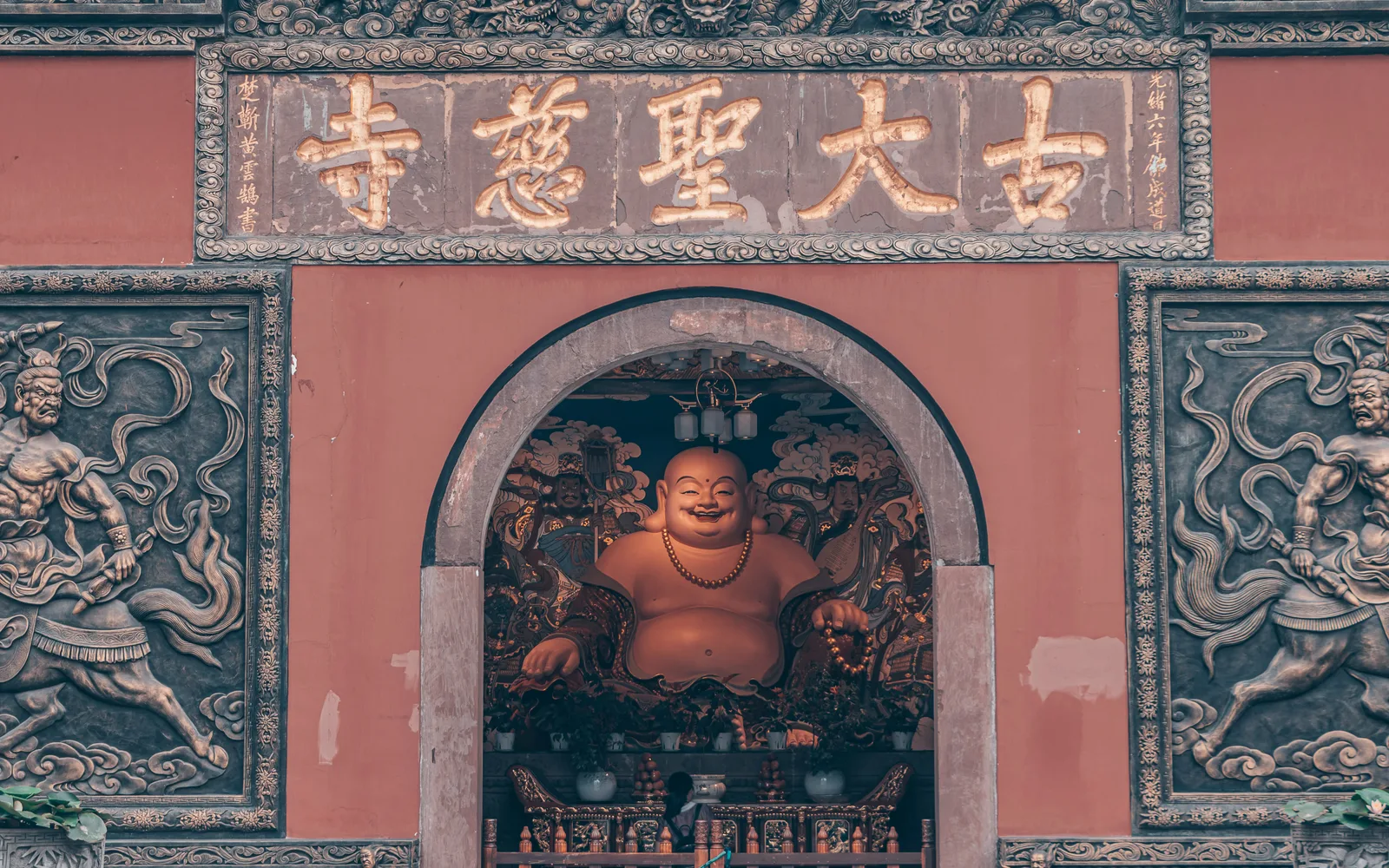
Vegetarian restaurants in the Michelin Guide
For one planned dinner: in October 2026 the Michelin Guide lists King’s Joy in Beijing and Fu He Hui in Shanghai with two stars each, and Mi Xun Teahouse in Chengdu with one. All three are vegetarian and need a reservation. Everyday vegetarian restaurants cost far less and are far more numerous; find them under 素食 in the map apps or on HappyCow.
How we plan a private tour for vegetarians
- Before we quote, we ask what each traveller does not eat: eggs, dairy, onion and garlic, root vegetables.
- Hotel breakfast is included in our tours. Lunch and dinner can be added as a meal plan at restaurants chosen for your standard, or left open for you to choose each day with the guide, who orders in Chinese.
- Where a meal is included, such as a listed lunch or the meals on a Yangtze ship, we ask the supplier for vegetarian food in advance and tell you in writing what they confirmed, before you pay.
- If a town on the route cannot meet your standard, we say so at the planning stage and change the meal plan or the stop.
- We do not certify food, and in an ordinary restaurant we cannot rule out shared woks and oil. If that matters to you, we plan around fully vegetarian kitchens and tell you where none exists.
Vegetarian travel in China: questions
Is China vegetarian-friendly?
In large cities, yes: vegetarian restaurants are easy to find and ordinary restaurants cook vegetable and tofu dishes to order. In small towns and scenic areas the choice is thin, and hidden lard, stock and oyster sauce are the main risk.
Does China have vegetarian food?
Yes. Buddhist vegetarian cooking is an old tradition, and tofu, vegetables, noodles and rice are everyday food. What is unusual is a kitchen that keeps meat stock and lard out without being asked.
Is it easy to be vegan in China?
Harder than vegetarian. Dairy is rare in Chinese cooking, which helps, but egg, oyster sauce, stock and chicken powder are common. Use fully vegetarian restaurants where you can, and a written card elsewhere.
Is Jain food available in China?
Not as a known category. A kitchen can cook without onion, garlic and root vegetables when it is given a written list, and some Buddhist vegetarian restaurants already avoid onion and garlic. On Air China, the oriental vegetarian meal (VOML) is listed as free of meat, fish, dairy, ginger, garlic and onion.
Can I get Indian vegetarian food in China?
Large cities have Indian restaurants; small towns and scenic areas generally do not. On a private tour we check what is open on your dates and place those meals where they exist.
How do I say I am vegetarian in Chinese?
我吃素 (wǒ chī sù). Add what you do not eat, because 素 alone is loose: 不吃肉、鱼、海鲜, and 不要猪油、高汤、蚝油.
Are vegetarian meals available on a Yangtze cruise?
Ship meals are mostly buffets, and vegetarian meals have to be requested in advance. We ask the cruise company for your group and confirm in writing what it will serve before you pay.
Can a China tour be fully vegetarian?
Yes on a private tour. With the meal plan, lunch and dinner are included at restaurants chosen for your standard. The limits are meals supplied by third parties, such as cruise ships, which we confirm in writing first.
Sources(5)
- MICHELIN-starred vegetarian restaurants worldwide (2 October 2026)MICHELIN Guide
- King’s Joy, Beijing: listingMICHELIN Guide
- Mi Xun Teahouse, Chengdu: listingMICHELIN Guide
- Special meals: types, codes and the 24-hour request ruleAir China
- Meal reservation rulesChina Southern Airlines