Guangzhou
Shamian Island
Colonial-era buildings and banyan trees on a quiet river island
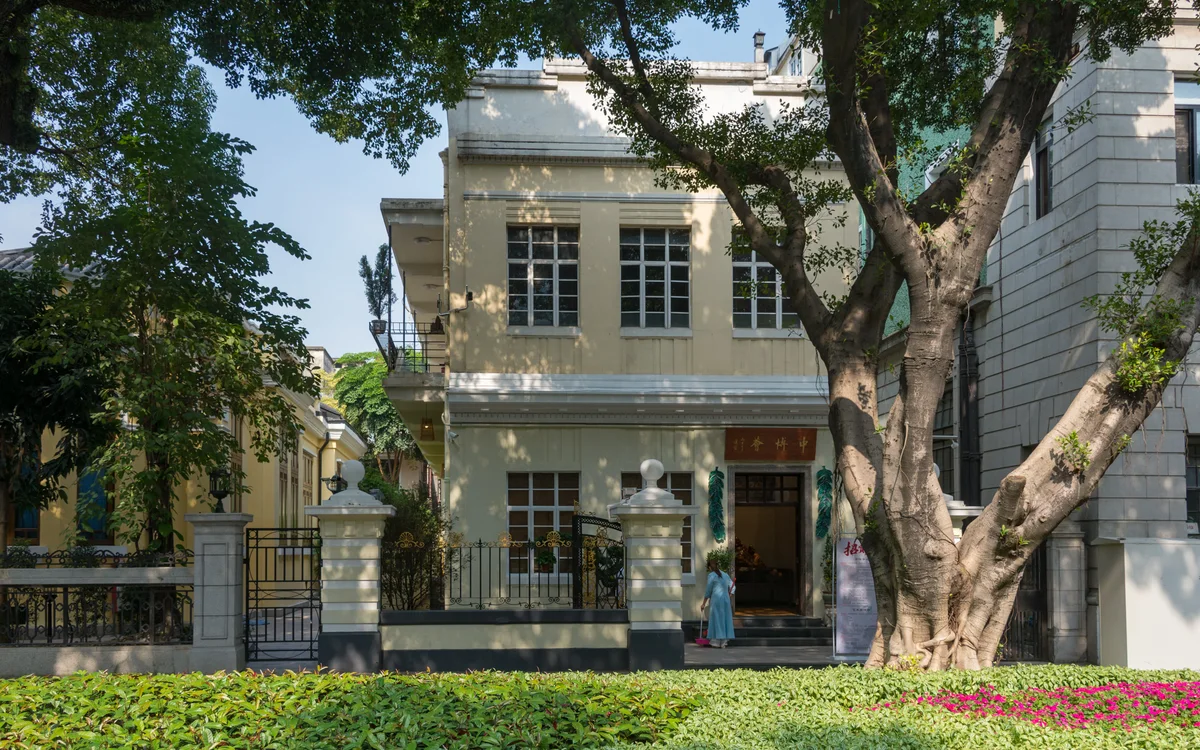
Photo (cropped and resized): xiquinhosilva, CC BY 2.0
.jpg)
Why it's worth the trip
Cross the little bridge over the canal and the traffic noise falls away. Shamian Street runs ahead under huge old trees, almost empty of cars, with flower beds and benches down the middle and grand houses with deep verandas on either side. Many people notice a faint scent in the air, and it comes from the island's camphor trees. Couples pose for wedding photos in front of the mansions, children sit sketching the buildings and students read on the benches.
That calm has a hard history. In 1859 Britain and France took this sandbank for themselves, and a canal 30 metres wide was dug along its north side to cut it off from the city. Its two bridges had iron gates, guarded and shut at night. Behind them grew a small foreign town, with consulates from more than ten countries and foreign banks and trading houses. Walk it with that in mind and the buildings take on names. There is the old French post office, an American bank, and the little Catholic chapel the French built at their east end of the island.
Shamian is small, about 900 metres end to end, and needs no plan beyond walking the main street one way and the riverside back. Many of the old buildings are now offices, hotels, cafés and shops, and you see most of them from outside. The chapel still holds services. About fifteen minutes' walk north, the old shopping streets around Shangxiajiu are loud and busy, and an afternoon that takes in both shows you two faces of old Guangzhou.
Don't miss
The West Bridge
Arrive over the West Bridge, a short brick bridge of three arches from 1861, where British police once kept the island's iron gate. Stop halfway and look down at the canal dug to cut Shamian off, with the busy city behind you and the trees ahead.
The old camphor on Fourth Street
On Shamian Fourth Street, beside the Victory Hotel, stands a camphor more than 300 years old, older than any building on the island. Pick up a fallen leaf and crush it between your fingers, and you will smell the same faint scent that drifts along the street.
The White Swan's waterfall
The White Swan Hotel on the river side opened in 1983, in the first years of China's opening up. In those days even a modest guesthouse checked papers at the door, but the White Swan let anyone walk in, and its lobby is still open to all. Inside, a waterfall tumbles through a three-storey garden called Water of Home, where Guangzhou families have posed for photos for decades.
Fitting it in
- Time to give it
- An hour or two on foot. Stay longer for a coffee under the trees, or come early for morning tea at the White Swan.
- When to go
- Late afternoon into dusk is the loveliest time. The low sun falls on the old fronts, and after dark the new Greater Bay Area Art Centre lights up across the river. Weekday mornings are the quietest, if you want the trees to yourself. Guangzhou is hot and wet from April to September, but old trees shade most of the main street; October to December is the most comfortable season.
- Pair it with
- Shamian is beside Huangsha station on Metro Lines 1 and 6. Yongqingfang, the restored lanes of Xiguan, the old district west of the city walls, is about 20 minutes' walk north-west, with Shangxiajiu shopping street close by. The Chen Clan Ancestral Hall is two stops up Line 1, so a morning there and an evening here make an easy day. Some Pearl River night cruises slow down on the water off the island, and one route boards at Huangsha pier, right beside it.
- Who can skip it
- If you have walked the Bund in Shanghai or the old streets of Macau, Shamian will feel small and gentle beside them. If you want things to do more than places to stroll, there is little here beyond the walk itself. Give the time to the Chen Clan Ancestral Hall or Yongqingfang instead.
Questions travellers ask
Is Shamian Island worth visiting?
Yes, for a slow hour or two. The island is only about 900 metres long, with a quiet main street of old consulates and banks under camphor and banyan trees, the oldest more than 300 years old. It is free, and it pairs easily with the Chen Clan Ancestral Hall and Yongqingfang on the same day.
How long do you need on Shamian Island?
One to two hours is enough to walk the main street, the riverside and the side streets. Add an hour for a coffee, or for morning tea at the White Swan Hotel. If you also want Yongqingfang, about 20 minutes away on foot, allow half a day for both.
Is there an entrance fee for Shamian Island?
No. Shamian is a public neighbourhood where people live and work, so you can walk in at any time. Most of the old buildings are offices, hotels, cafés and shops, so you enjoy them from the street. The Catholic chapel of Our Lady of Lourdes still holds services, and the White Swan Hotel's lobby is open to everyone.
What is the best time to visit Shamian Island?
Late afternoon into dusk, when the low sun falls on the old buildings and the far bank lights up after dark. Weekday mornings are the quietest. October to December is Guangzhou's most comfortable season; from April to September it is hot and wet, though old trees shade most of the main street.
Can you see Shamian, Yongqingfang and the Chen Clan Ancestral Hall in one day?
Yes, it is one of the easiest days in Guangzhou. Start at the Chen Clan Ancestral Hall in the morning and walk about 25 minutes to Yongqingfang for the lanes and lunch. Then walk about 20 minutes more to Shamian for the late afternoon. By metro, Chen Clan Academy and Huangsha stations are two stops apart on Line 1.
Sources: Guangzhou International (Foreign Affairs Office of Guangzhou): Shamian international neighbourhoodXinhua: Shamian's renewal, an old street story (2024)Guangzhou Daily: the scent of Shamian's old camphor trees (2022)Yangcheng Evening News: the Shamian West Bridge and the canal of 1859–1861 (2021)Southern Daily: the White Swan Hotel and its open doors
Private tours that include it
All private tours
Guangzhou, Shunde & Foshan: 5-Day Private Tour
Guangzhou · Shunde · FoshanTravellers who want Lingnan streets, gardens and food discovery while keeping one hotel base.Itinerary & price- Want a different trip?Tell us your days and cities, and we'll plan the trip around you.Plan it with us
Photo (cropped and resized): Guangzhou, Shunde & Foshan: 5-Day Private Tour (Daniel Lu (User:dllu), CC BY-SA 4.0)

More in Guangzhou
 Chen Clan Ancestral HallA Qing clan academy known for Lingnan carving in wood, brick and stone
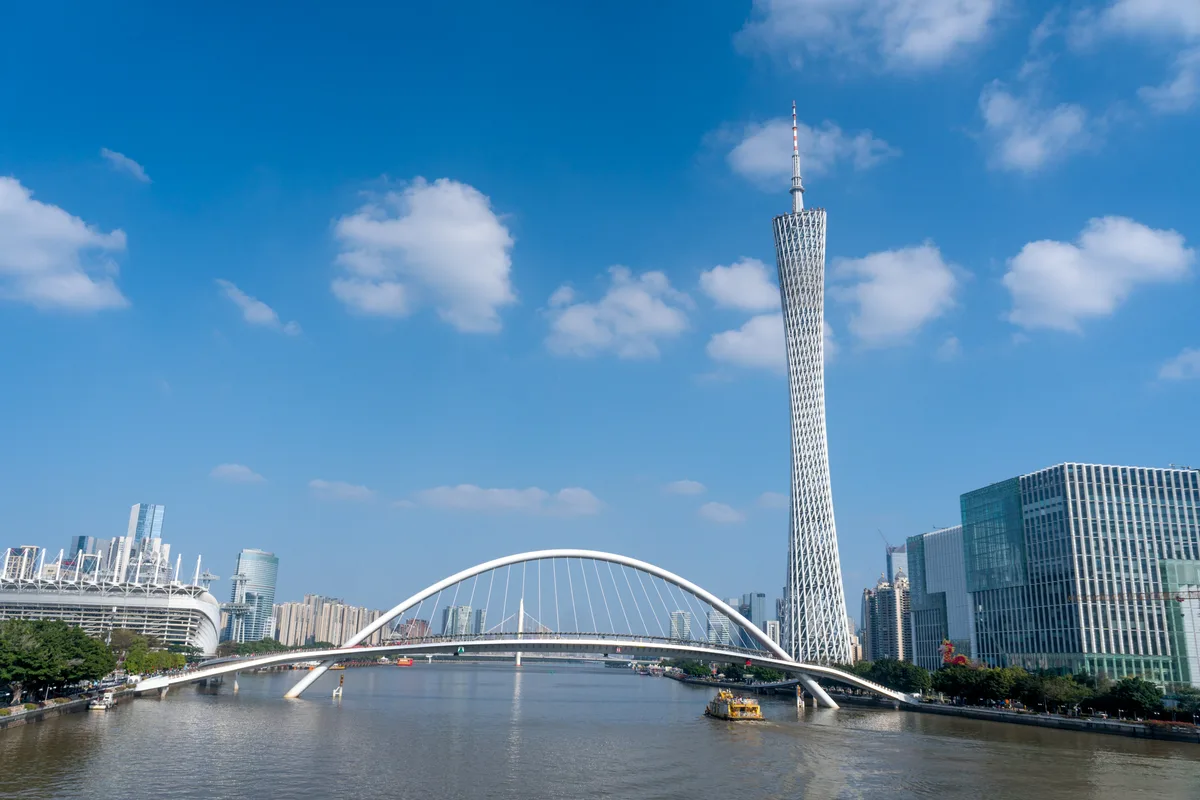 Canton TowerThe Pearl River landmark, best seen lit up at night
Photo (cropped and resized): Chen Clan Ancestral Hall (Shujianyang, CC BY-SA 4.0)

Want us to arrange it?
Hand us the whole trip and we will fit it in.