Hangzhou
Lingyin Temple and Feilai Peak
A temple nearly 1,700 years old, beside cliffs carved with Buddhas
Why it's worth the trip
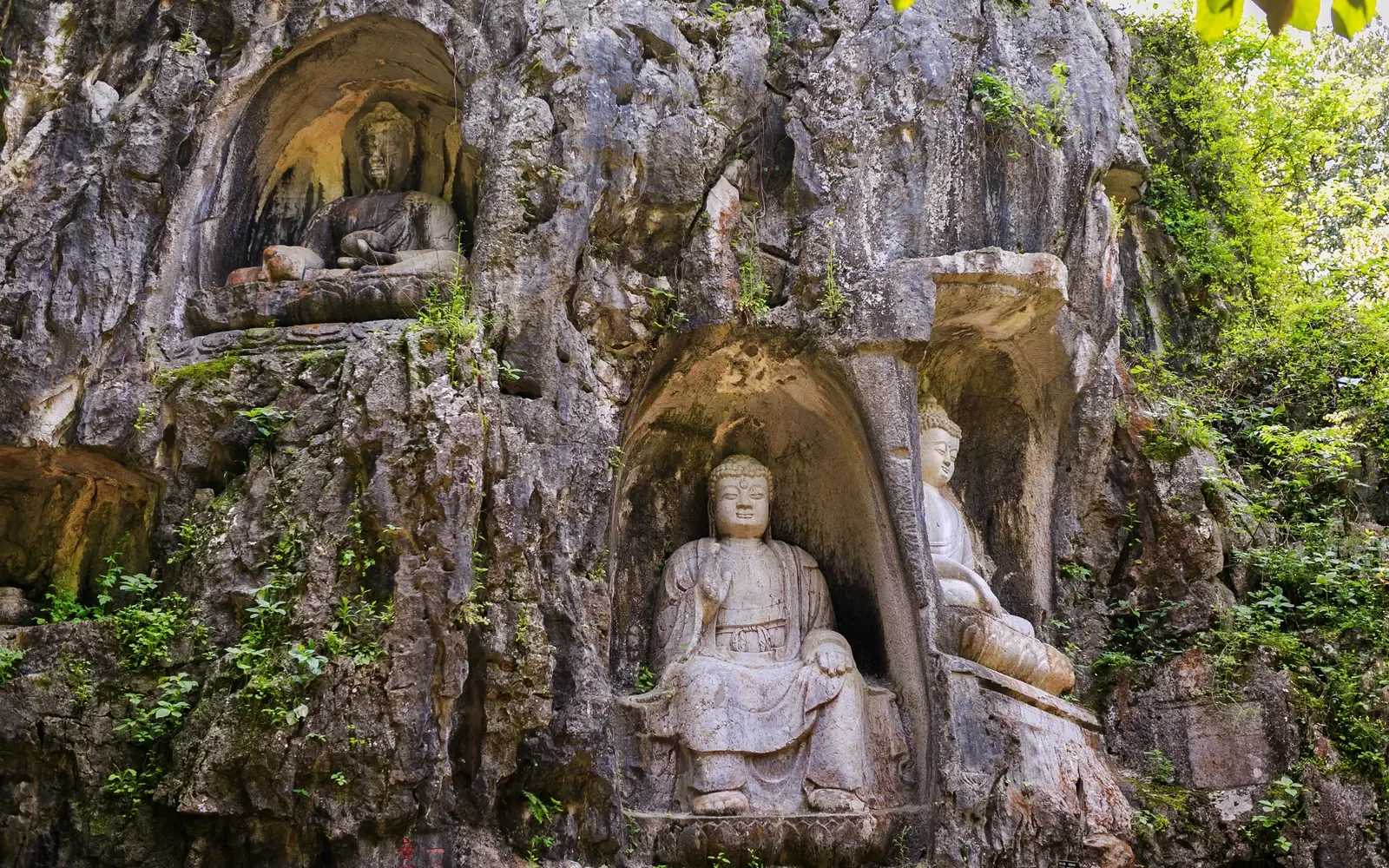
Inside the gate, the path follows a clear stream under a cliff of grey, pitted rock, and the rock is full of Buddhas. Some sit in little hollows, some are the size of a person, and one fat, laughing Buddha grins at you across the water. Cool air breathes out of the caves, even in summer. Further on, past the yellow walls, incense smoke drifts over the temple courtyards. In the main hall sits a gilded Buddha nearly 25 metres tall, throne included.
The peak's name is a question. About 1,700 years ago, an Indian monk called Huili looked at it and declared it a small hill from Vulture Peak in India, where the Buddha taught. When, he asked, did it fly here? So it became Feilai Feng, the Peak That Flew Here, and he founded the temple facing it. Unlike the hills around it, the peak is limestone, worn into odd shapes and caves. Over four centuries, starting about a thousand years ago, carvers cut hundreds of Buddhas into it. The Ming painter Dong Qichang put the question again in two lines for the pavilion by the spring: since when has the spring been cold, and from where did the peak fly?
Lingyin is a working temple, so its halls are for worship first, and you share them with monks and people bowing with incense. Give the peak as much time as the halls, because the carvings are the heart of the visit. Fans of Chinese folk tales can look for Jigong, the scruffy ‘mad monk’ who loved wine and meat. He became a monk here, and a hall beside the Medicine Buddha Hall tells his life in eighteen murals. For a quieter hour or two, walk about a kilometre uphill beyond the temple, on stone steps through the woods, to the small hillside temples of Yongfu and Taoguang.
Don't miss
The laughing Buddha by the stream
He sits in the rock beside the stream, facing the path to the temple, leaning back with his belly bare and one hand on a big cloth sack. He laughs so hard his eyes have become two crescent moons, and eighteen of the Buddha's disciples crowd round him. Carved about eight hundred years ago, this is the largest group on the peak, and almost everyone stops here for a photo.
A thread of sky in Longhong Cave
Step into Longhong Cave and daylight falls through an opening in the roof like the mouth of a well. Climb the steps nearby to a smaller chamber, look up, and on a bright day a tiny round hole in the rock lets in a single thread of sky. The seven-storey stone pagoda at the cave mouth honours Huili, the monk who named the peak.
Behind the great Buddha
In the main hall, walk round behind the gilded Buddha. The whole back wall is a mountain of some 150 clay figures, more than 20 metres high, telling of a boy's journey to 53 teachers in search of wisdom. Guanyin, the goddess of mercy, rides a great sea creature at the bottom centre, with the boy himself beside her, palms together, in a little red bib.
Fitting it in
- Time to give it
- Two to three hours for Feilai Peak and the temple's main halls. Allow half a day if you walk on uphill to Yongfu and Taoguang.
- When to go
- Go on a weekday if you can, because weekends draw far more visitors. If West Lake is on the same day, take the morning slot. In summer the shaded stream path and the cool caves make this one of the easier places in Hangzhou on a hot day. Avoid the Spring Festival, the May Day holiday and the first week of October.
- Pair it with
- West Lake is about half an hour east by car. Come back through the Longjing tea villages in the hills south of the temple, and stop for a cup of the green tea grown on those slopes. Lingyin in the morning, tea at midday and a boat on the lake in the afternoon make a classic Hangzhou day.
- Who can skip it
- With only a few hours in Hangzhou, give them to West Lake. If big temples leave you cold, skip the halls and spend your time on the Feilai Peak path. Entry needs a reservation, so if your date is full, spend the morning in the Longjing tea villages instead.
Questions travellers ask
Is Lingyin Temple worth visiting?
Yes, above all for Feilai Peak opposite the temple, where hundreds of Buddhas were carved into the limestone, mostly between the 10th and 14th centuries. Lingyin itself is one of China's best-known Buddhist temples, founded about 1,700 years ago and still busy with worshippers. Two to three hours covers the peak and the main halls.
Do I need to book Lingyin Temple, and is it free?
Yes, you need to book, and entry is currently free. Every visitor needs a booking in their own name for a morning or afternoon slot, made at least a day ahead, and a passport is accepted. One booking covers Feilai Peak, Lingyin Temple and the hillside temples of Yongfu and Taoguang. The rules change from time to time, and we can check them for your date and book for you.
How long do you need at Lingyin Temple and Feilai Peak?
Plan on two to three hours: about an hour on the Feilai Peak path and in its caves, and the rest in the temple's main halls. Add an hour or two if you climb the stone steps to the Yongfu and Taoguang temples on the slope above. If West Lake is on the same day, keep Lingyin to the morning.
What is the best time to visit Lingyin Temple?
A weekday, ideally in spring or autumn. From mid-May to mid-June 2026, about 26,000 people booked a visit on an average weekday and about 45,000 at weekends, so weekdays are noticeably calmer. In summer the shaded path and cool caves make it a good hot-day choice. Avoid the Spring Festival, the May Day holiday and the first week of October.
Can you visit Lingyin Temple and West Lake in one day?
Yes, and it makes one of the best days in Hangzhou. Lingyin is about half an hour west of the lake by car. See the temple and Feilai Peak in the morning, stop in the Longjing tea villages on the way back, and spend the afternoon on the lake. Book Lingyin's morning slot ahead.
Sources: Lingyin Temple: 千年古寺 大慈灵隐 (the temple's founding, halls and great Buddha)Lingyin Temple: 鹫峰从天竺飞来 (Huili and the name of Feilai Peak)Lingyin Temple: 布袋和尚与弥勒佛造像 (the laughing Buddha of Feilai Peak)Lingyin Temple: 龙泓洞 (Longhong Cave and its skylight)Lingyin Feilai Peak Scenic Area: free admission and timed reservation notice
Booking at a glance
From our attraction-booking rules.
Lingyin Temple and Feilai Peak
- Passport accepted
- Yes
- Real name
- Yes
- Face value
- Free, reservation required
Confirmed when you enquire: when tickets open
Admission is currently free, but every visitor needs a real-name timed reservation, and a passport is accepted. There is no same-day booking, and on-site registration ended on 1 February 2026. We recheck the rule for your date before the written confirmation.
Checked
Book this with us
Private tours that include it
All private tours
More in Hangzhou
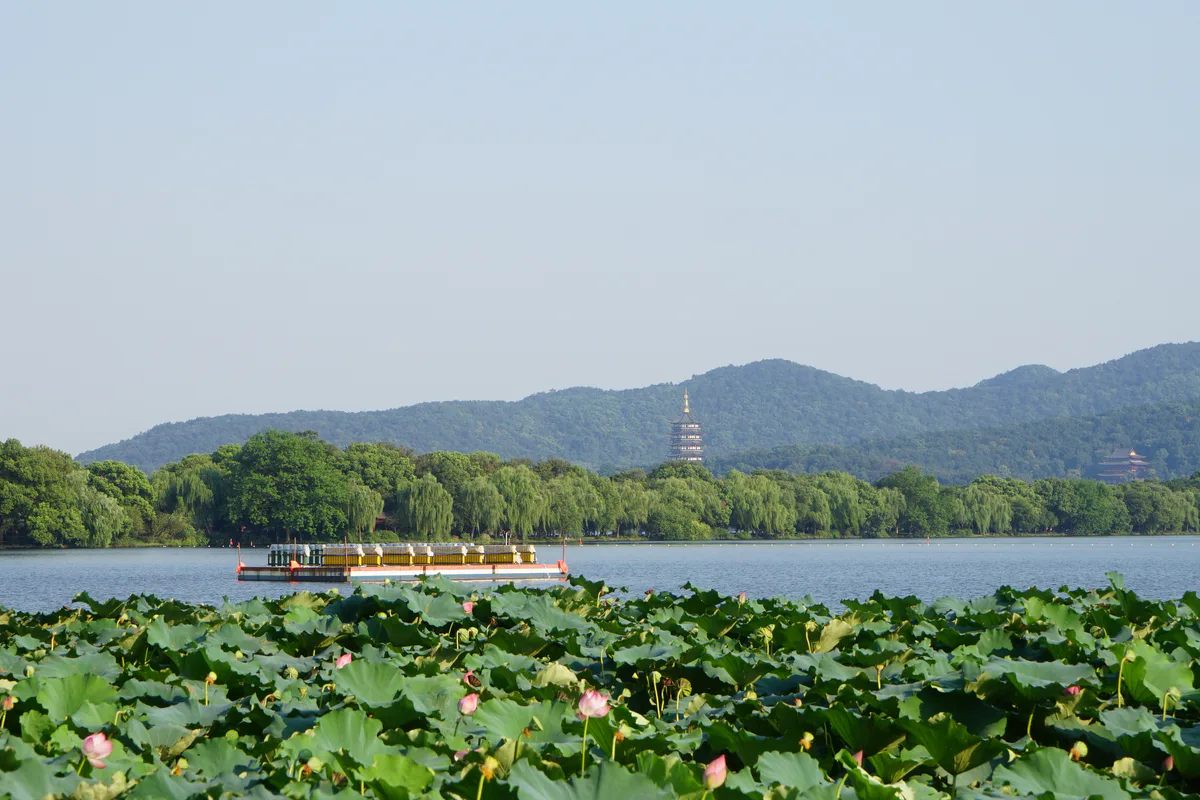 West LakeCauseways, pagodas and lotus ponds, on foot at dawn or from a boat
 Liangzhu Ancient CityA city built over 5,000 years ago, a World Heritage site
Photo (cropped and resized): Liangzhu Ancient City (Siyuwj, CC BY-SA 4.0)

Rather not deal with bookings?
Attraction booking is USD 7 per person per sight, plus any ticket at face value. Or hand us the whole trip.