Xi'an
Terracotta Warriors
The buried army of China's first emperor

Photo (cropped and resized): BrokenSphere, CC BY-SA 3.0

Why it's worth the trip
Step into the hall over Pit 1 and the army is suddenly below you. Rank after rank of life-size clay soldiers stand in long earth trenches, in a pit 230 metres long. Walk along the rail and look closely. Faces, hair and beards change from one soldier to the next; Yuan Zhongyi, who led the first dig, counted 24 kinds of beard alone. Some figures carry their makers' names, stamped or scratched in out-of-the-way places. Qin rules made craftsmen sign their work, so a fault could be traced back to the man who made it.
Farmers digging a well found the first fragments in 1974, and the digging and restoring have hardly stopped since. The army you see is grey, but it was painted in more than a dozen colours over a coat of lacquer. Pit 1's figures lost almost all of theirs long ago, when the pit burned and then flooded. Where paint does survive, it starts to change within about 15 seconds of being uncovered and can curl and flake away within four minutes. So the excavators work slowly, and only about a fifth of Pit 1's estimated 6,000 figures and horses are out of the ground.
The pits are only the outer edge of the First Emperor's tomb. His own mound rises 1.5 kilometres to the west, in Lishan Garden, and has never been opened. The historian Sima Qian wrote that its chamber held rivers and seas of mercury, and the soil over its centre does carry unusually high levels. The same ticket covers both areas. Pit 1 gives you the scale, Pit 2 the close-up detail, and Lishan Garden the bronze chariots and the mound itself.
Don't miss
Walk Pit 1 to the far end
At the east end the army faces you, its front ranks in battle robes without armour, the lightly armed vanguard. Keep following the rail round to the far end of the hall. There, half-reassembled soldiers stand on the pit floor among the fragments, and restorers are often at work.
Meet single soldiers in Pit 2
Archers, chariots and cavalry were buried here together in one formation. Single figures are shown up close, among them a cavalryman with his saddled horse and a mid-ranking officer. Look for the display case that shows the colours the army was painted in.
Two bronze chariots, rebuilt from fragments
In Lishan Garden's Bronze Chariots Museum, two half-size bronze chariots, each drawn by four bronze horses, are shown together. They were found beside the emperor's tomb mound in 1980, crushed into more than 3,000 pieces, and restorers spent eight years putting them back together. Look for the gold and silver fittings, 14 kilograms of them on the pair.
Fitting it in
- Time to give it
- Most of a day from central Xi'an. The museum reckons on about an hour and a half for the pits and the same for Lishan Garden; travel, security checks and the shuttle between them come on top.
- When to go
- Avoid Chinese national holidays such as May Day and National Day, when the day's tickets can sell out. The pits are under roofs, so rain matters little there, but Lishan Garden and the ground round the mound are open-air. In hot or wet weather, that is the part to shorten; spring and autumn suit it best.
- Pair it with
- Huaqing Palace stands beside Huaqingchi station on Metro Line 9, which the public-transport route back to Xi'an passes anyway. The Tang emperor Xuanzong and his consort Yang Guifei bathed in its hot springs, the ones Bai Juyi wrote of in his poem The Song of Everlasting Regret. In 1936 Chiang Kai-shek was seized there by his own generals, in the Xi'an Incident. Stop only if you cut Lishan Garden short and still have time.
- Who can skip it
- If you hoped to walk among the soldiers, you will see them from walkways round the pits instead. With older parents or tired legs, see the three pits first and decide on Lishan Garden afterwards; if you go, make it the bronze chariots. With one day in Xi'an and little interest in archaeology, spend it in the walled city.
Questions travellers ask
Are the Terracotta Warriors worth visiting?
Yes, for most first-time visitors to Xi'an. Pit 1 alone is 230 metres long, and the first look down at its ranks of life-size soldiers stays with you. You see them from walkways round the pits rather than walking among them. If you have only one day in Xi'an and little interest in archaeology, the walled city may suit you better.
How long do you need at the Terracotta Warriors?
Plan on most of a day from central Xi'an. The museum reckons on about 1.5 hours for the three pits and another 1.5 hours for Lishan Garden, where the bronze chariots are. Travel out to Lintong, security and passport checks, and the shuttle between the two areas all come on top.
Do I need to book Terracotta Warriors tickets in advance?
Yes. Each visitor needs a real-name reservation made with the passport they will carry, and the original passport is checked at entry. One ticket covers the three pits, Lishan Garden and the shuttle between them. Around national holidays the day's tickets can sell out, so book once your date is fixed; we can check and book it for you.
Do I need a guide for the Terracotta Warriors?
No, you can visit on your own. Xi'an's metro (Lines 1 and 9) and a local bus reach the museum, and the shuttle to Lishan Garden is included in the ticket. A guide earns their fee mainly in explanation: the formations, the ranks, and how the figures were made and restored. If you mostly want to see the scale, the labels are enough.
When is the best time to visit the Terracotta Warriors?
Spring or autumn, on an ordinary weekday. Avoid May Day and the National Day week in early October, when tickets can sell out. The pits are indoors, so rain matters little there, but Lishan Garden is open-air and hard going in summer heat. Start early so the second half of the day is not squeezed.
Sources: UNESCO World Heritage Centre: Mausoleum of the First Qin EmperorEmperor Qinshihuang's Mausoleum Site Museum: Pit 1Emperor Qinshihuang's Mausoleum Site Museum: Pit 2Emperor Qinshihuang's Mausoleum Site Museum: the bronze chariotsXinhua: 50 years since the Terracotta Warriors were found (2024)
Booking at a glance
From our attraction-booking rules.
Terracotta Warriors (Emperor Qinshihuang's Mausoleum Site Museum)
- Passport accepted
- Yes
- Real name
- Yes
- Face value
- CNY 120 · standard adult
Confirmed when you enquire: when tickets open
One ticket covers the museum and Lishan Garden, with the shuttle between them. The museum's English ticket link routes to Trip.com. Sales can stop at capacity.
Checked
Book this with us
Private tours that include it
All private tours
Xi'an & the Terracotta Warriors: 5-Day Private Tour
Xi’an · Terracotta Warriors · City Wall · Muslim QuarterFirst-time Xi’an visitors who want the major imperial and city landmarks in context.Itinerary & price
Beijing, Xi'an & Shanghai: 8-Day Private Tour
Beijing · Xi'an · ShanghaiFor a first visit when you only have about a week of leave. There is no spare day.Itinerary & price
Beijing, Xi'an & Shanghai: 12-Day Private Tour
Beijing · Xi'an · ShanghaiFirst-time China travellers who want three core cities, a full Terracotta Warriors day and light arrival and departure days.Itinerary & price
Photo (cropped and resized): Beijing, Xi'an & Shanghai: 12-Day Private Tour (Pixelflake, CC BY-SA 3.0)

More in Xi'an
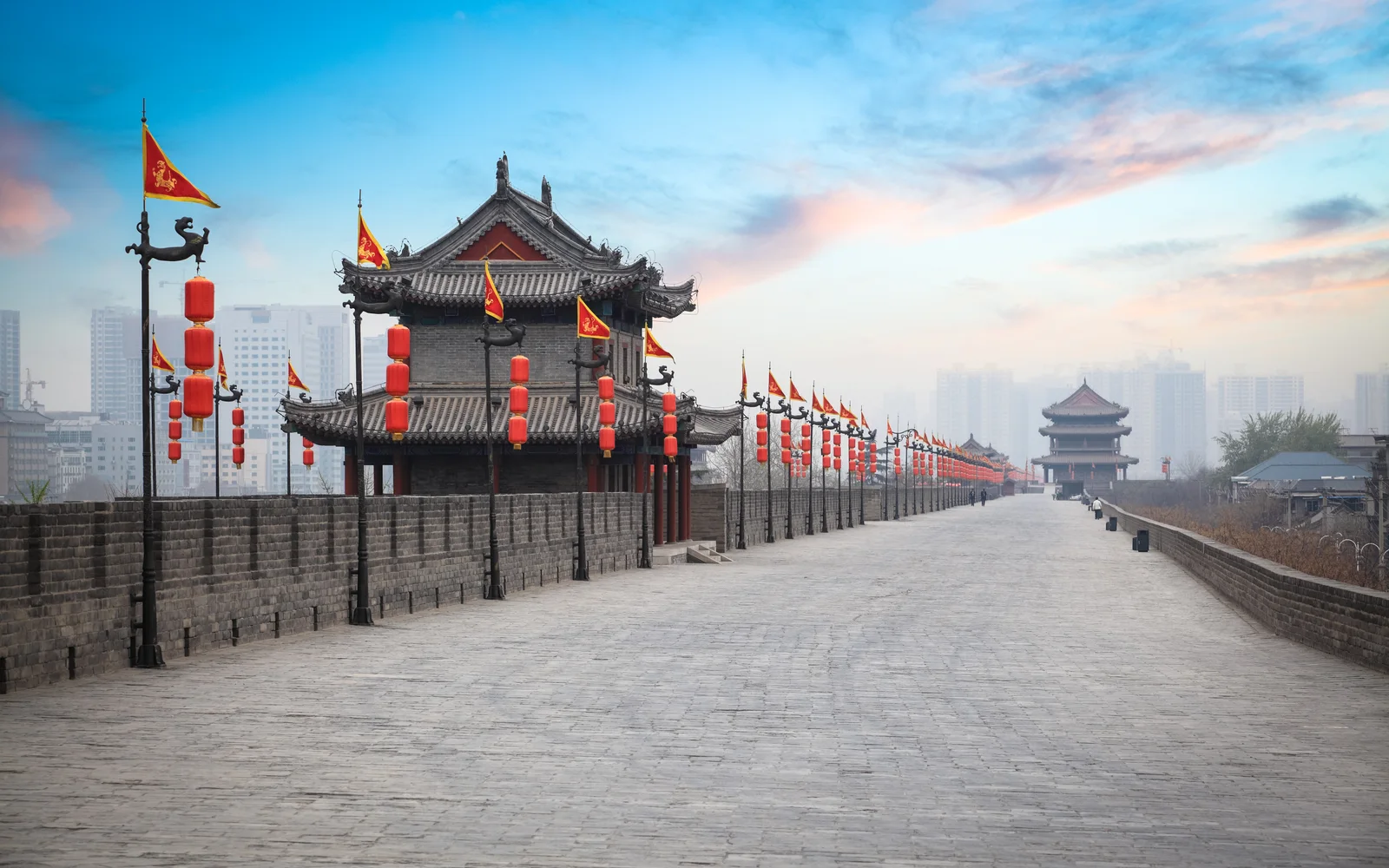 Xi'an City WallWalk a stretch on top, or cycle the whole loop
 Shaanxi History MuseumTreasures from the Zhou to the Tang, and Tang tomb murals
Photo (cropped and resized): Shaanxi History Museum (Danielinblue, CC BY-SA 3.0)

Rather not deal with bookings?
Attraction booking is USD 7 per person per sight, plus any ticket at face value. Or add a private guide, or hand us the whole trip.