
At Ashima Rock in the Minor Stone Forest, one pillar invites two questions. Geology asks how carbonate rock was fractured and dissolved into the form you see. Sani Yi oral tradition, edited texts, a 1964 film and scenic-area naming explain why people see Ashima in it. Neither reading cancels the other, but they are not interchangeable: legend does not explain karst, and a human-looking outline does not prove Ashima was a documented historical person. Begin among the denser formations of the Major Stone Forest to read the rock, then use the Minor Stone Forest to test how viewpoint, story and naming make a cultural landmark.
Before looking for Ashima, separate four kinds of evidence
| Layer | What it can establish | What it cannot establish |
|---|---|---|
| Geology and material evidence | The material, fractures, dissolution and physical development of the pillars. | It cannot identify a pillar as a person or confirm a story. |
| Living oral tradition | Ashima belongs to a Sani Yi narrative tradition told, recited and sung in multiple versions. | It is not a civil record proving one identifiable historical woman. |
| Edited literature and film | Editors and filmmakers made choices that carried Ashima far beyond Shilin. | One printed or filmed plot cannot stand for every oral version. |
| Tourism presentation | Names, signs, sculptures and displays show how Ashima is presented now. | A modern label or show is not evidence for geology or unchanged practice. |
What shaped Stone Forest—and what did not?
The useful sequence is material, structure and water. UNESCO describes carbonate rocks deposited in a shallow-marine environment, later uplifted and subjected to long weathering and dissolution. The Stone Forest operator explains how fractures divided the rock and water enlarged those weaknesses through a long, multi-stage history. This produced pillars, grooves, fissures and gaps. It does not give the individual Ashima silhouette one birthday or exact rock history. “A girl became stone” belongs to narrative, not physical explanation.
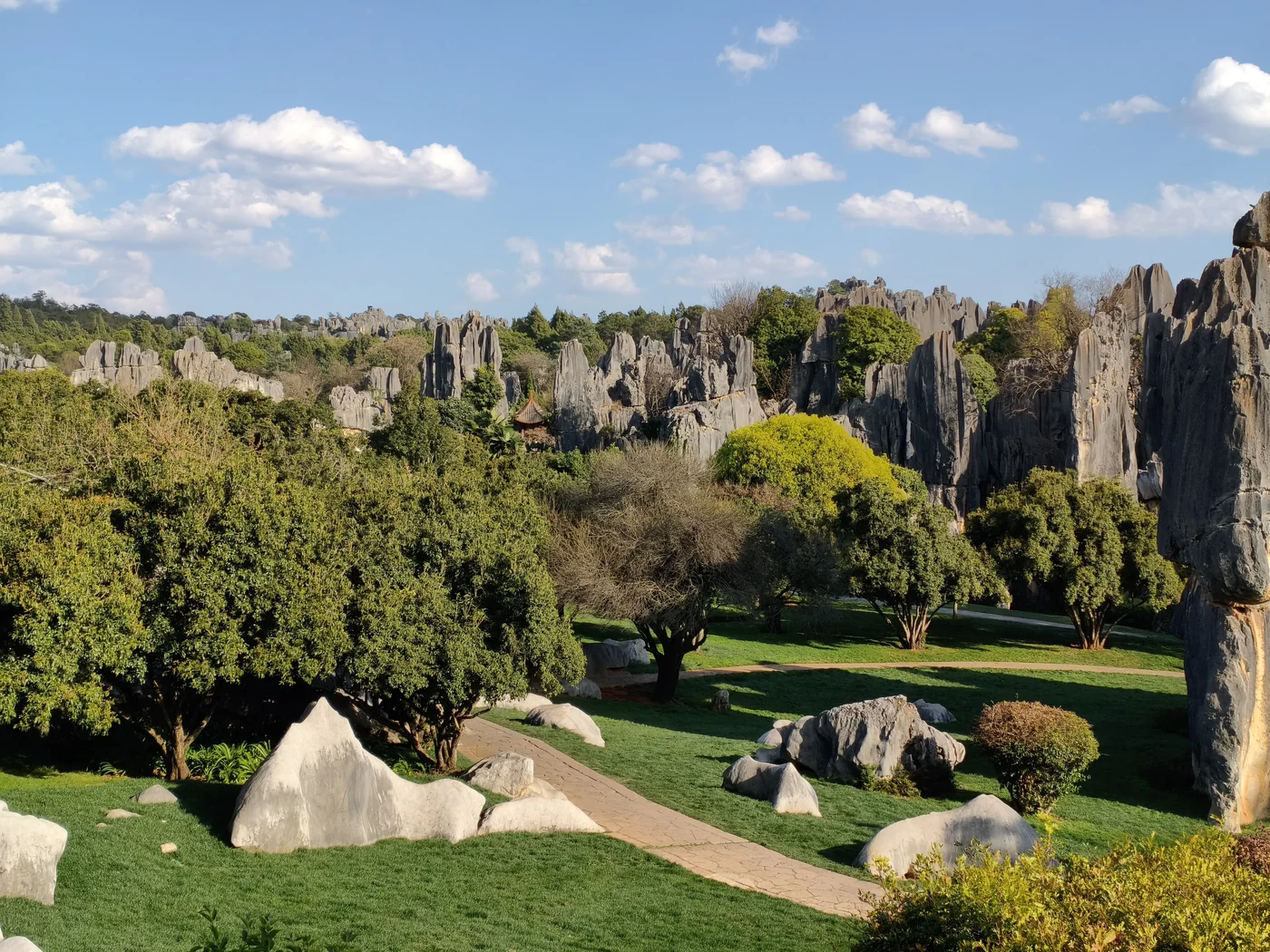
In the Major Stone Forest, do not chase named shapes immediately. Look for repeated features: vertical joints dividing a mass, deepened channels, horizontal bedding and gaps that change the apparent scale of neighboring pillars. Move from one wide view to a public-path close view. Repeated structure across several rocks is stronger evidence of process than resemblance to a person or animal.
- Compare a dense cluster with an isolated pillar. Ask what dissolved or what separation widened.
- Study edges, grooves and fissures from the path; texture can explain dissolution better than a silhouette.
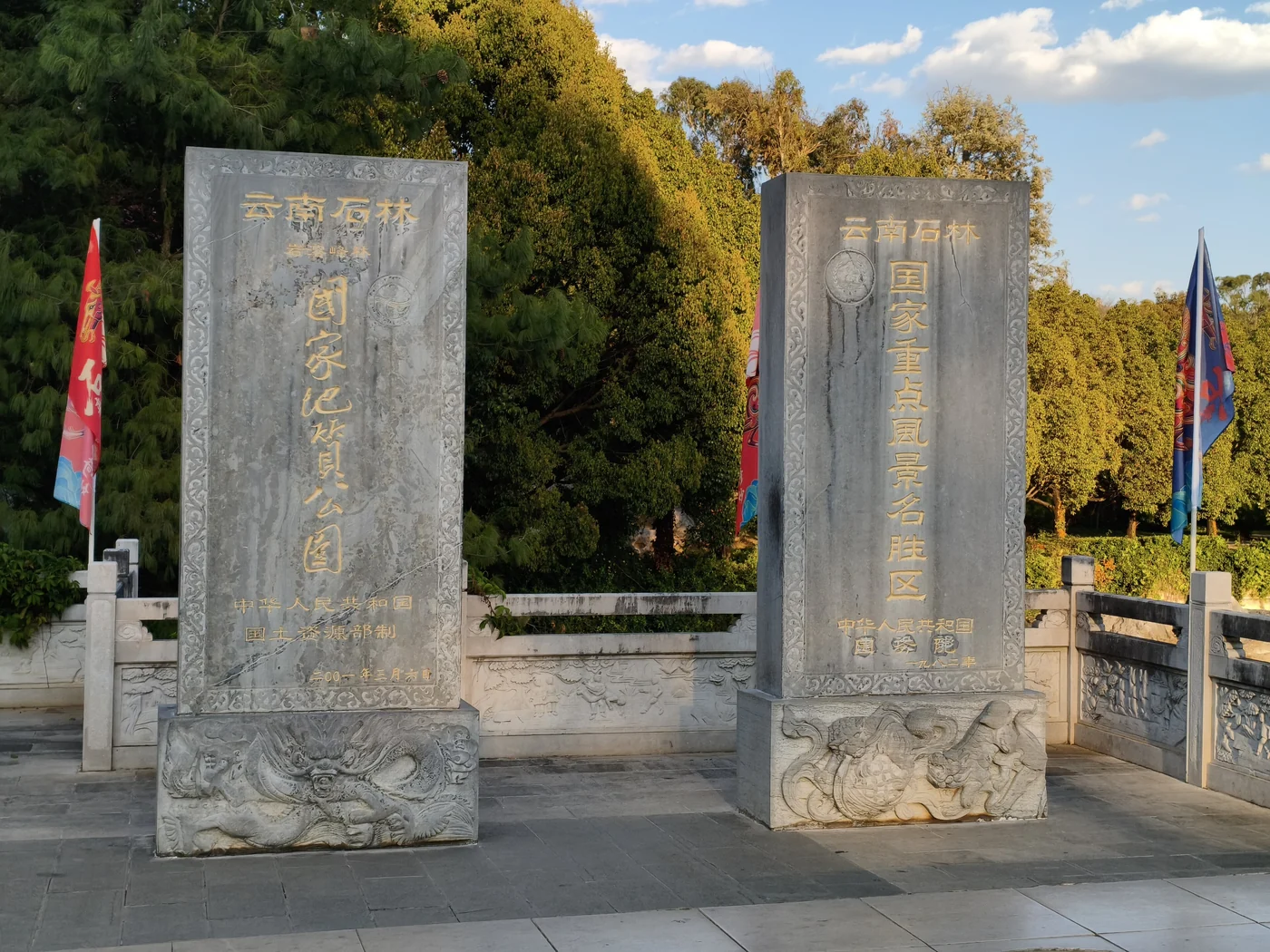
- If a current geology panel is available, check its evidence, then return to the rock. A designation sign identifies a place; it does not explain formation.
Who is Ashima if she was not a documented historical person?
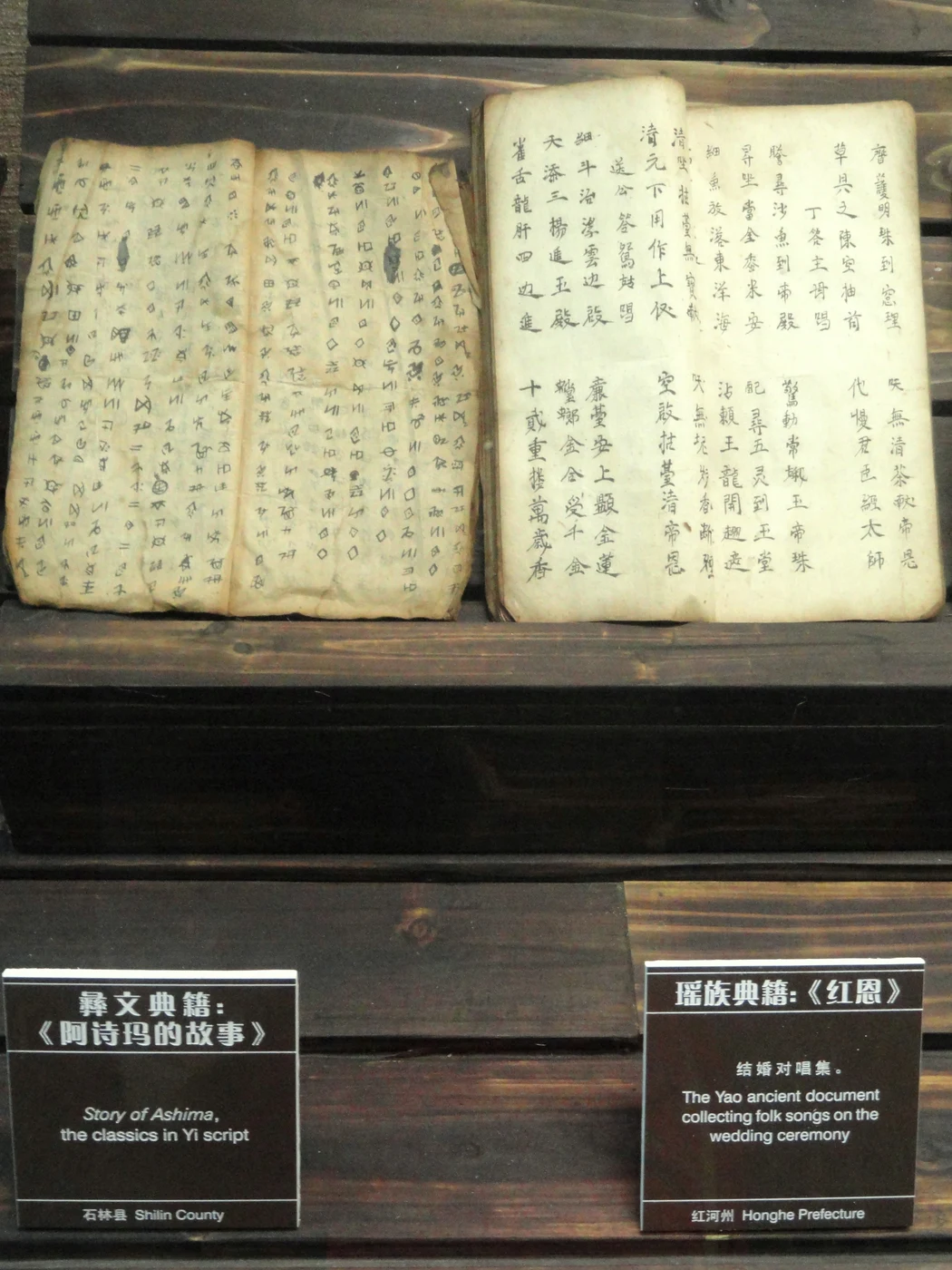
The national intangible-cultural-heritage record identifies Ashima as a narrative tradition of the Sani, a branch of the Yi people associated with Shilin. It was created in the Sani language and has been transmitted through spoken and sung performance. Familiar tellings place a young woman called Ashima in conflict with coercive marriage and powerful opponents; separation, attempted rescue, loss and transformation or echo can organize the story. That outline is a doorway, not a single authorized script. Character relationships, episodes, endings and performance contexts can vary.
Oral tradition is not a defective book waiting for one final text. Teller, community, language, occasion and audience can shape emphasis. Researchers also describe interaction between oral telling and bimo manuscripts before modern editing. Heritage recognition concerns a continuing tradition; it does not turn one plot into an eyewitness biography or prove a precise duration of Sani settlement.

Why can the printed poem and the film tell different stories?
Chinese-language collection and edited publication began in the early 1950s. Print widened circulation, but selection, ordering, translation and editing were interventions—not a recording of every local variant. The 1964 film adapted again. A scholarly comparison documents a major change: representative oral and edited texts in its sample treat Ahei as Ashima's brother, while the film makes him her lover. The Hong Kong Film Archive independently confirms the 1964 production details and the film's romance plot. The same scholarship also shows different endings among representative oral, edited and film forms.
The film still mattered: it introduced Ashima widely and strengthened her association with Yunnan's landscape. Influence, however, is not historical priority. At Shilin, label a remembered romance, costume or transformation as film or later presentation when that is its source; do not project it backwards as the single Sani account. A film still is neither needed nor cleared for this guide.
Two quick tests for a label or display
When it describes oral tradition
Ask whose version or performance context is being summarized, which language or textual form it uses, and whether the wording acknowledges variation.
When it describes the film
Treat the romance, costume, song arrangement, setting and ending as cinematic choices unless another source independently supports that detail for a particular Sani version.
How should you look at Ashima Rock?
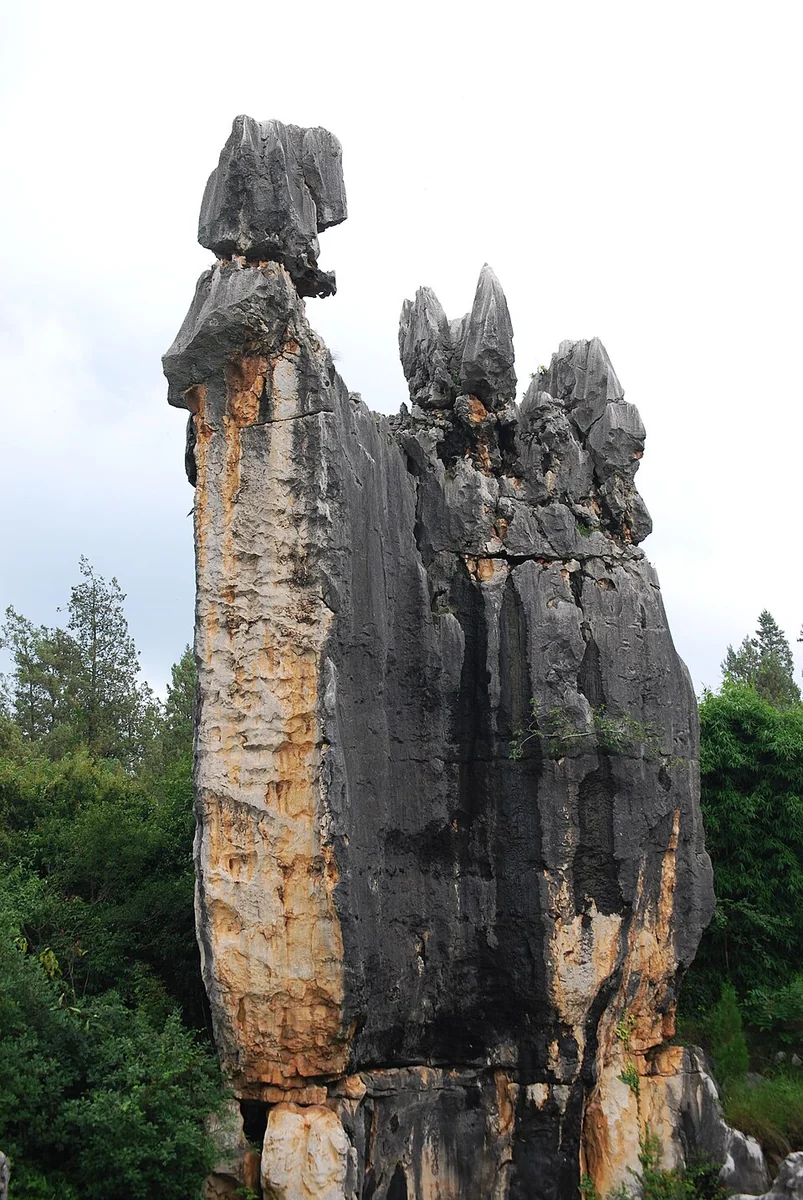
The scenic-area institution places Ashima Rock in the Minor Stone Forest. It is a natural formation, not a carved statue. Recognition depends on a favorable public viewing angle: from one position, the upper outline can suggest a human profile, headdress, posture and a load on the back; from another, it returns to an irregular pillar among other rock. That change is not a failure of the attraction. It exposes the mechanism by which geology, viewpoint, a supplied name and a story already present in the viewer's mind create recognition together.
- From the permitted path, first see the whole pillar with neighboring rock, vegetation and open space.
- Compare two safe viewpoints and find where the human-like outline becomes clearest.
- Separate what is visible from what the name supplies. “Profile,” “shoulder” or “posture” may be observations; “this is Ashima” is the cultural identification.
- Check whether a current label gives geology, story, adaptation or only a scenic name.
- Take one contextual photograph before a tight crop so the formation is not mistaken for a carved monument.
A field-reading sequence from the Major to the Minor Stone Forest
This is a sequence for understanding, not an entrance map. Follow current routing, closures and staff directions even if they change the order or keep you from a planned observation. The goal is to arrive at Ashima Rock with physical evidence in mind, rather than beginning with a silhouette and turning every formation into a character. For most visitors, the exercise works without adding a museum, performance or long lecture.
- In one Major Stone Forest cluster, study joints, grooves, gaps and scale before reading a scenic name. Restate the process: carbonate rock, fracture, water, dissolution, separation.
- Use a geology panel if available. Separate formation explanation from direction or designation; photograph and translate only where current rules permit.
- Test one named formation other than Ashima from two angles. Make the naming process visible before meeting the familiar story.
- In the Minor Stone Forest, compare spacing, background and sightline with the denser area rather than declaring one simply more beautiful.
- At Ashima Rock, use the viewing method above and give the wider geology as much attention as the profile.
- In any verified-open cultural display, check whether oral tradition, edited text, film and tourism are separated. Record mixed wording; do not convert it into history.
Who should spend extra time on the story—and who can keep it brief?
You came mainly for geology
Give the Major Stone Forest priority, then use Ashima Rock as a final test of how people name landforms. You do not need a performance or a long plot summary to understand the cultural layer.
You know the film or follow oral traditions
Reserve more attention for wording on labels and displays. Ask whether each detail belongs to a Sani telling, a twentieth-century edited text, the 1964 film or current scenic presentation.
Your time, energy or mobility is limited
Choose one geological comparison and the Ashima viewpoint rather than collecting every named formation. Confirm the current accessible route with the operator; this article does not promise a step-free path.
A family can turn face-finding into a useful game: name what an outline suggests, then find a crack or groove needing geological explanation. A film-aware visitor can note one remembered relationship or ending, then check whether onsite wording calls it film, edited text or oral tradition. Quick-photo visitors may keep this brief; anyone expecting a verified biography or guaranteed show should reset that expectation.
What should you not assume, stage or photograph?
- Do not present Ashima as independently proved history; call her a figure in Sani Yi oral tradition.
- Do not use flood or transformation episodes to explain karst.
- Do not make one printed or filmed relationship the only oral version.
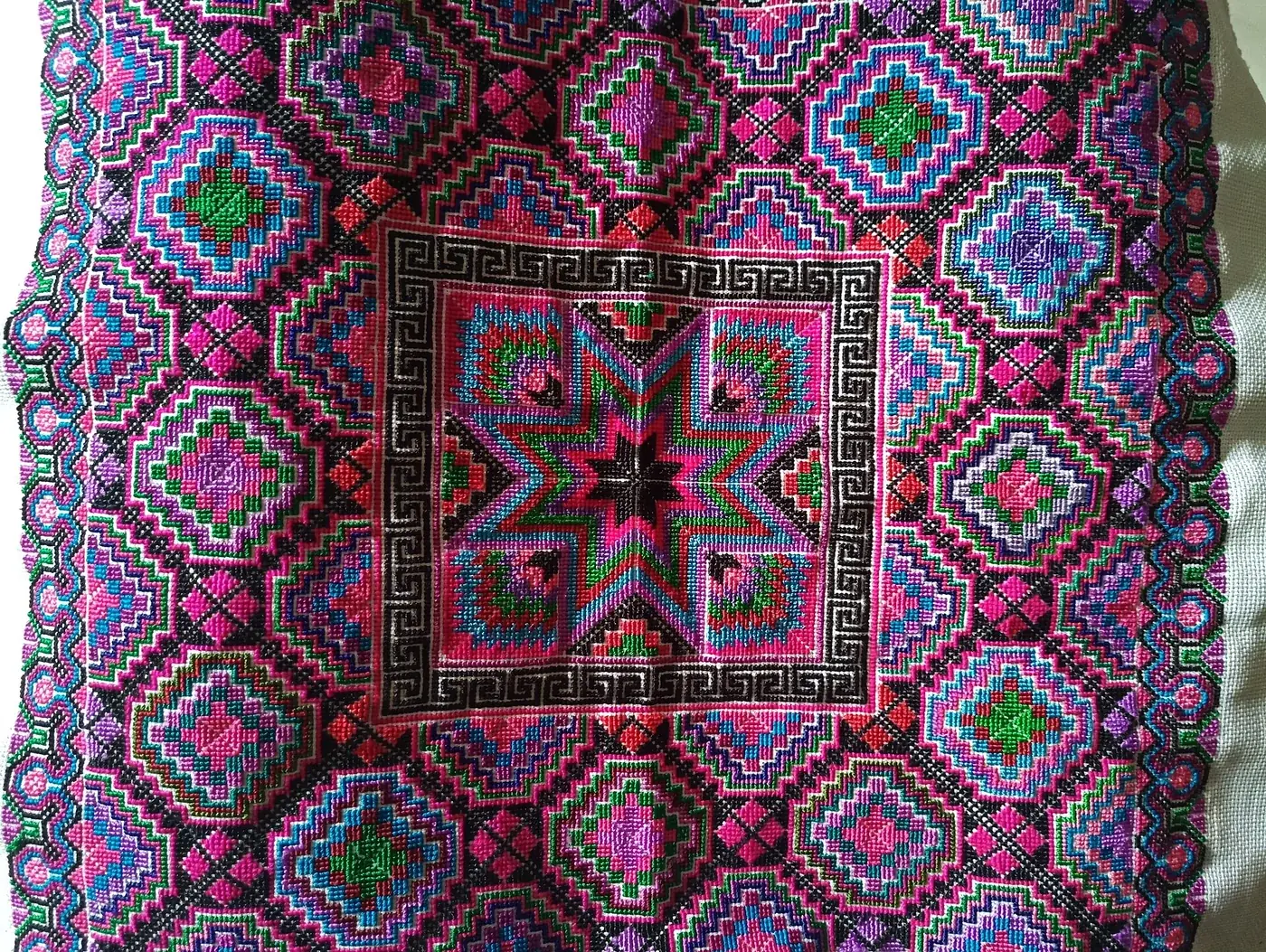
- Do not make costume, souvenir, sculpture or visitor show a complete record of Sani life.
- Do not climb, touch rock or leave the route for a photograph. Follow current notices.
- Do not assume a public show permits portraits or recording. Obtain consent and respect restricted contexts.
What if the exhibition, performance or viewpoint fails?
| Problem | Recovery |
|---|---|
| A named exhibition space is closed or cannot be identified with confidence. | Do not substitute a similarly named hall. Concentrate on rock, label language and viewpoint. |
| There is no performance. | Nothing essential has failed. Compare the heritage record with scenic naming and modern presentation. |
| The favorable viewpoint is crowded. | Wait outside the narrow flow, or test angle and naming on another formation. Return only if routing permits. |
| Rain, mist or flat light weakens the silhouette. | Inspect fissures, grooves and neighboring rock. Do not leave the path for a clearer outline. |
| A route or area is temporarily closed. | Follow the official alternative. Success means preserving evidence layers, not reaching every stop. |
- Can I explain the pillars without using the legend as geology?
- Can I describe Ashima without claiming a proven historical biography?
- Do I know whether a detail came from oral tradition, edited literature, film or tourism presentation?
- Did I compare more than one safe viewing angle and retain the rock's wider context?
- Have I checked current routes, optional displays and onsite rules with the operator rather than relying on this evergreen interpretation guide?
Questions visitors ask at Shilin Stone Forest
Is Ashima Rock a carved statue, and where is it?
It is a natural formation, and the scenic-area institution places it in the Minor Stone Forest. Nothing was carved. Read the rock itself among the denser formations of the Major Stone Forest first, then use the Minor Stone Forest to test how viewpoint, story and naming together make a cultural landmark.
Why does the human profile disappear when I move?
You are not standing in the wrong place. Recognition depends on a favorable public viewing angle: from one position the upper outline can suggest a human profile, headdress, posture and a load on the back; from another it returns to an irregular pillar among other rock. That change is not a failure of the attraction, so compare two safe viewpoints from the permitted path.
Was Ashima a real historical woman?
There is no civil record proving one identifiable historical woman. The national intangible-cultural-heritage record identifies Ashima as a narrative tradition of the Sani, a branch of the Yi people associated with Shilin, created in the Sani language and transmitted through spoken and sung performance. Heritage recognition concerns a continuing tradition, not an eyewitness biography.
Does the 1964 film tell the original story?
No, it is one adaptation. Chinese-language collection and edited publication began in the early 1950s, and the 1964 film adapted again. A scholarly comparison documents that representative oral and edited texts in its sample treat Ahei as Ashima's brother, while the film makes him her lover; the Hong Kong Film Archive independently confirms the 1964 production details and the romance plot.
Is Shilin Stone Forest a UNESCO World Heritage site?
Two different designations overlap here. Shilin UNESCO Global Geopark provides the broad geological framework, while the South China Karst World Heritage property is a separate serial property whose mapped components in Shilin are Naigu Stone Forest and Suyishan/Suogeyi. Do not assume that every named rock, Ashima Rock included, is an individually listed World Heritage component.
My time and energy are limited — what is the minimum that still works?
One geological comparison and the Ashima viewpoint, rather than collecting every named formation. For most visitors the exercise works without adding a museum, performance or long lecture, and if there is no performance nothing essential has failed. Confirm the current accessible route with the operator; no step-free path is promised here.
Official, heritage, academic and image sources reviewed on 14 August 2026(16)
- Shilin UNESCO Global Geopark — geology and current institutional descriptionUNESCO
- South China Karst — serial World Heritage property and mapped componentsUNESCO World Heritage Centre
- Ashima — national intangible cultural heritage project recordChina Intangible Cultural Heritage Network / China Intangible Cultural Heritage Museum
- Transmission and textual forms of AshimaChinese Social Sciences Net
- Performance context and variation in the Ashima traditionChina Folklore Society
- Comparing oral, edited and film versions of AshimaJournal of Yunnan Agricultural University (Social Science)
- Ashima (1964) — film-archive programme recordHong Kong Film Archive
- Major and Minor Stone Forest — current visitor-facing landscape descriptionShilin UNESCO Global Geopark
- How Stone Forest formed — fractures, dissolution and multi-stage developmentStone Forest scenic-area institution
- Ashima Rock hero: LHOON, CC BY-SA 2.0; cropped and converted to WebPWikimedia Commons
- Wider Shilin view: Ngguls, CC BY-SA 4.0; resized and converted to WebPWikimedia Commons
- Shilin designation monuments: Ngguls, CC BY-SA 4.0; resized and converted to WebPWikimedia Commons
- Ashima in Sani Yi script: 瑞丽江的河水, CC BY-SA 4.0; resized and converted to WebPWikimedia Commons
- Ashima Rock portrait: Cs california, CC BY 3.0; resized and converted to WebPWikimedia Commons
- Shilin Sani embroidery: 瑞丽江的河水, CC BY-SA 4.0; cropped and converted to WebPWikimedia Commons
- Yi-script Story of Ashima display: Daderot, public domain; resized and converted to WebPWikimedia Commons


