China itinerary reality check
Is Your China Itinerary Too Rushed? Run These 5 Checks
Before booking, test five pressure points: hotel-base changes, full transfer days, hotel moves, fixed bookings and fatigue chains. If two collide—or one can ruin a key day—the route needs another pass.
Published · Dynamic transport and venue details should be checked again before travel.
Quick answer
Do not count cities first; count the friction between them.
A route with four cities can work for one group and be a poor fit for another. The real test is the chain of base changes, door-to-door transfers, fixed bookings and recovery time between them.
How many cities can you realistically visit in China?
There is no useful universal limit. Start with the places where you sleep, then count how often you actually change base. Two routes can contain Beijing, Xi’an, Chengdu and Shanghai yet demand a completely different amount of effort.
One may move in a clean sequence with several nights in each place. The other may add a one-night stop, an arrival-day flight and a hotel switch inside a short stay. On a map, both appear to be four cities. On the ground, they are not the same trip.
- How many times will you check out, carry luggage and check in again?
- Does every short stay have a clear reason?
- Is a one-night stop giving you a real visit, or only proving that you were there?
- Is the route moving in one direction, or doubling back?
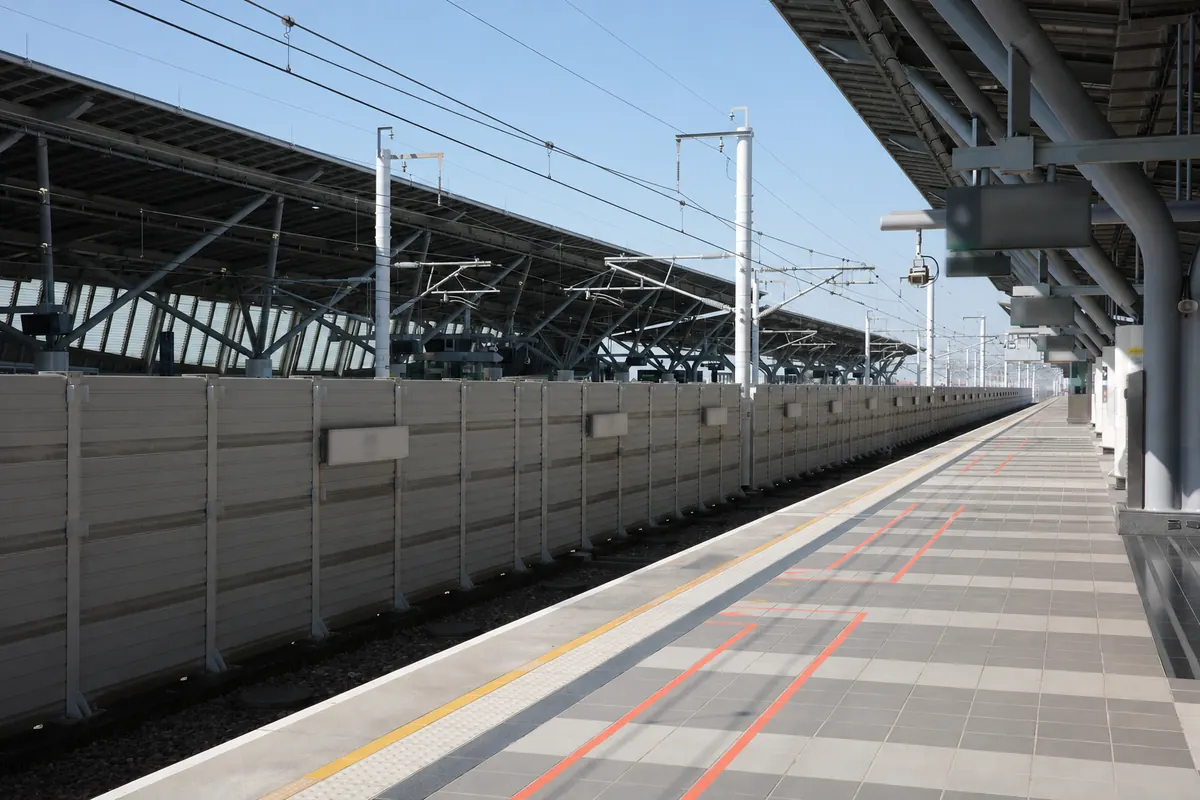


A transfer day is made of the moments around the ticket, too.
Turn every train or flight into a full transfer.
The duration printed on a ticket is not the whole journey. China Railway’s own guidance describes station-side steps such as entering the station, security, gates and boarding in addition to the train itself. Read the specific station and ticket guidance for your journey before travel.
- 1
Leaving the hotel — check-out, luggage and the ride to the station or airport.
- 2
The departure side — entry, security, finding the gate or platform and boarding.
- 3
The transport itself — train or flight time is one segment, not the whole day.
- 4
The arrival side — leaving the station or airport, reaching the new hotel, checking in and getting oriented.
- 5
The first real activity — decide whether it still deserves to be on that day.
See our door-to-door Beijing–Zhangjiajie–Shanghai transport comparison for a worked planning example, and read the China Railway English FAQ for current official rail guidance. Individual station procedures and ticket rules can change.
Treat a hotel move as a cost, not a blank space.
It is easy to write only “transfer to new hotel” and make a day look open. In reality, that move can split the day into two weak halves. A new base earns its place only when the benefit is clear.
A move is earning its place when it protects
- a better next-day starting point;
- less repeated travel or walking;
- a fixed visit that would otherwise be too exposed.
A single base may be stronger when it protects
- a full morning or easier arrival day;
- more room for luggage and check-in friction;
- the energy of a parent, child or slower walker.
Put fixed bookings before flexible ideas.
A timed-entry museum, performance, train or flight creates a hard edge in the day. Put it on the route before loose ideas such as “wander the neighbourhood” or “see another attraction if there is time.”
Reservation systems, opening hours and operating notices can change. Check the official page for the particular museum, park or attraction you care about rather than relying on a generic rule copied from another itinerary.
If a fixed visit matters, avoid making it depend on a long transfer arriving exactly as planned.
Look for fatigue chains, not isolated busy days.
An isolated early start may be manageable for some travellers. Several early starts after a late arrival, a long transfer and a high-walking day create a different problem. Read the trip top to bottom and look for patterns that have no recovery window.
You do not need to empty every day. You need to know which days cannot absorb a delay, a changed plan or a lower-energy morning.
Remove a city only when it gives something specific back.
There is no universal rule that says three cities are better than four. A city is worth removing when doing so returns a full sightseeing day, one less hotel move, space around a non-negotiable booking or a usable recovery window for the people travelling.
Do not remove a place merely because a generic itinerary says so. Remove it when there is no other way to protect the parts of the trip you care about most.
Compact is not the same as comfortable.
| A compact route | A more comfortable route |
|---|---|
| More city changes and a fuller wish list. | Fewer base changes and clearer priorities. |
| A transfer day still contains a major fixed activity. | The move is light, or the fixed activity is protected. |
| Every day needs to go exactly to plan. | A delay does not erase the only meaningful activity. |
| The fastest traveller sets the rhythm. | The pace reflects the people actually travelling. |
Neither style is automatically better. Some travellers knowingly choose a packed trip. The useful question is whether the route matches the pace you have chosen, rather than quietly demanding more than you expected.
Illustrative example — not a client trip
Ten travel days, four bases: where a fragile sequence appears.
Imagine a couple with ten travel days, four hotel bases and three intercity moves. One transfer day includes a timed museum. The next morning has an early train. No single item is automatically wrong — together, they make two days depend on every transfer and check-in going smoothly.
Keep the cities
Move the timed visit onto a full day and make the travel day intentionally light.
Keep the visit
Remove one hotel move so the fixed booking no longer sits beside an unstable day.
Protect the priorities
Remove one city and return a complete day to the route instead of adding another partial arrival day.
A quick self-check before booking
Look closer after two “yes” answers—or one high-consequence conflict.
One conflict is enough when it could cost a non-refundable booking or the only meaningful activity in a city.
- Are you changing cities every one or two nights?
- Does a moving day also contain a timed attraction?
- Are you moving hotels during a short stay?
- Do several early starts follow a late arrival or high-walking day?
- Would one delay remove the only meaningful activity in a city?
Not sure what the trip needs?
Talk it through with a planner before deciding what to book.
Use WhatsApp or leave your email to enquire about a private China tour. We confirm the arrangements, inclusions and quotation before booking.
Talk to a China trip plannerThe initial enquiry is free. Trip arrangements, inclusions, the quotation and payment conditions are confirmed in writing before booking.I want planning carried into selected arrangements or local coordination.
Ask about Full Trip supportCommon planning questions
China itinerary pace: practical answers
How many cities can you realistically visit in China?
There is no fixed number that works for every trip. Count overnight bases, door-to-door transfer days, hotel changes and the pace of the people travelling. Four cities can be comfortable in one route and fragile in another.
What makes a China itinerary feel rushed?
The usual problem is not one busy day. It is a chain of base changes, partial arrival days, timed bookings, early starts and high-walking days with no room for delay or recovery.
Is a fast China itinerary always a bad itinerary?
No. Some travellers deliberately choose a compact trip. It works when the trade-offs are visible, the group accepts the pace and the important days do not all depend on perfect transfers.
Should I remove a city from my China trip?
Remove a city only when doing so returns something you actually value: a full sightseeing day, one less hotel move, protection around a fixed booking or a usable recovery window.
What if I am not sure what help my trip needs?
Use WhatsApp or leave your email to enquire about a private China tour. We confirm the arrangements, inclusions and quotation before booking.
Source and editorial note
This guide deliberately does not give one fixed “arrive X minutes early” rule or a universal city limit. Transport schedules, airport procedures, reservation systems and operating notices change. Check the official source for the specific train, flight or venue before travel.